Maincard is a no-code iGaming platform. For $5,000 and zero monthly fees, they provide a fully customized website, games, payments, license, compliance, CRM, support, and liquidity to help you jumpstart your first 12 months of the business.
They’re experiencing explosive growth: 150+ operators onboarded in two months, massively outpacing competitors. In iGaming, where copycats always hunt for what works, that kind of success is an invitation.
Maincard is the “Shopify for iGaming”. The easiest way to launch an iGaming brand. But instead of positioning around ease of use, they’re positioning around speed. And that gap could kill them.
A narrative gap happens when your story and your customer’s perception don’t align. You say one thing. They get another. That gap creates a “broken telephone” effect as your message spreads through the market.
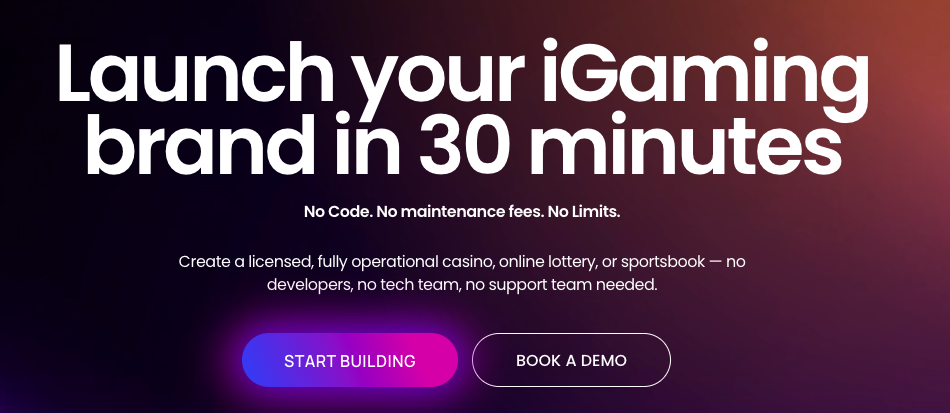
Maincard promises speed and can launch your iGaming brand in 30 minutes or less. It holds the world record for fastest launch at 8.21 minutes. Faster than you can eat a decent-sized pizza.
But operators don’t look to open a casino in under 30 minutes. Whether it launches in minutes or weeks doesn’t matter much, not when the alternative is 6-9 months of development. They’re making a business decision, not ordering delivery.
They want to launch an iGaming brand as easily as opening a Shopify store. And that’s exactly what Maincard offers, handling everything its customers don’t want to touch. Operators just need to bring their players.
Maincard’s current story works because speed is proof of ease. It’s close enough. But “close enough” isn’t “owned”, and that leaves the door open for copycats. It’s a great example of how even successful companies can carry narrative gaps that threaten their position.
A narrative gap can happen when 1) you don't truly understand your customers, 2) the market has shifted but your positioning hasn't, or 3) your discovery stops too early, focusing on early signals instead of the deeper value.
When they form, narrative gaps create real business risk:
- Marketing inefficiency - You spend resources on things that aren’t as important to customers as you think, rather than on the positioning that matters. Maincard pours resources into speed while operators are buying ease.
- Word-of-mouth distortion — You want people to share your story with others, but they will pass only the simplest version they remember. Your complete value proposition is reduced to a sound bite as it spreads. The story travels, but the meaning gets lost. People remember Maincard launches casinos in 30 minutes, but their peers don’t understand why that matters when they’re looking for ease.
- Competitive vulnerability — You leave the positioning unclaimed. An opportunity your competitors won’t hesitate to seize, especially if they can deliver on the promise. Maincard could wake up to a competitor owning “Shopify for iGaming” while they’re still selling 30-minute launches.
- Brand trust risk — Your promise must be consistent across every touchpoint to build trust and strengthen recall. Get the positioning wrong, and delivering on that promise at every touchpoint costs more than you need. To maintain brand consistency, Maincard would have to invest in being fast everywhere. Speedy onboarding, quick support, and fast updates. But that’s not what their customers are buying them for.
- Creative misalignment — When your narrative aligns with your value, you know exactly what to showcase. Knowing what your customers care about and how to spur them to action gets the creative juices flowing. Get it wrong, and your creative energy goes to the wrong proof points. Maincard broke the world record for fastest casino launch. Instead, they could show their launch success rate, proof that ease leads to results.
Companies can grow despite narrative gaps, but gaps create vulnerability. You can reach a significant scale while carrying one, but that doesn’t mean it’s safe. The real question isn’t survival. It’s whether you’ll own your category or watch a competitor claim the position you already occupy.
Maincard’s future depends on how easily competitors can deliver on the “Shopify for iGaming” promise. If it’s hard to replicate, the gap might not matter, for now. If it’s easy to match, a competitor will claim the position while Maincard keeps selling speed. The question isn’t whether they’ll survive. It’s whether they’ll own “easiest way to launch” or let someone else take it.